
Riders who prioritise survival over aesthetics need luggage that handles continuous exposure to rain, road spray, and long mileage. Throw-over saddlebags offer a straightforward mounting method that fits cruiser and touring motorcycles without complex hardware. The market presents two distinct approaches to keeping luggage dry. One model relies on water resistance paired with external rain covers. The other model uses a waterproof design that requires no additional covers. Both options serve riders who value function over appearance. The following comparison examines how these two systems operate, how they differ in practical use, and which configuration aligns with specific riding habits.
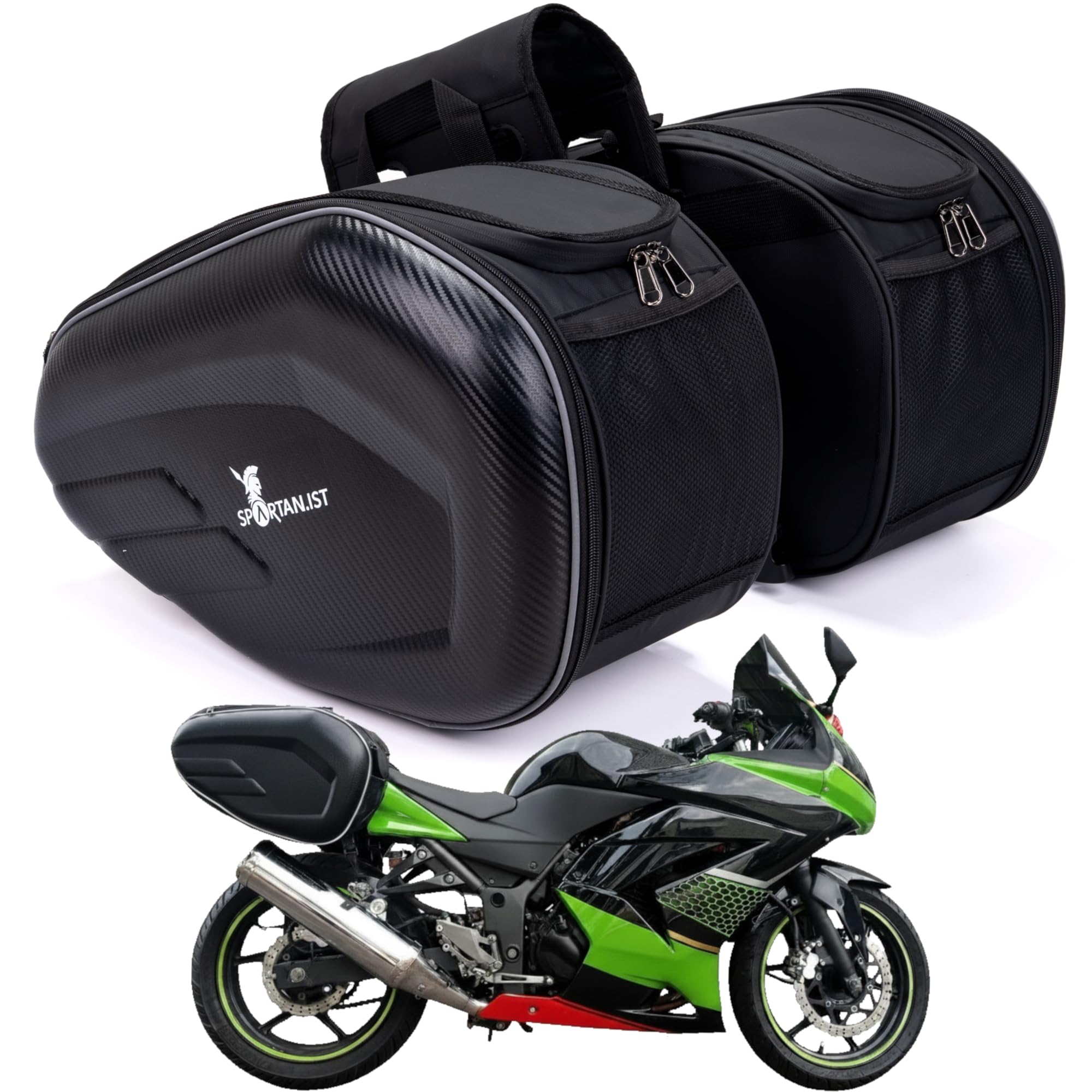
The difference between water resistance and waterproof design
Water resistance describes a material or seam treatment that repels light moisture for a limited period. It does not guarantee complete exclusion of water under sustained pressure or heavy rainfall. A water resistant bag will manage drizzle and brief showers effectively. It will not keep contents dry during prolonged exposure to downpours or when riding through deep standing water. The Enhanced+ model uses this approach. It features a carbon black finish and ships with rain covers to handle heavier conditions. Riders must attach these covers when weather conditions exceed light moisture. The covers act as an external barrier. They must be secured properly to prevent water ingress. This system requires active management. You check the forecast. You prepare the covers. You fit them before riding. The process adds a step to your routine. It also adds a layer of protection when needed.
Waterproof design refers to construction that excludes water through sealed materials and integrated engineering. A waterproof bag for motorcycle storage does not require external covers because the bag itself is engineered to block water. The Premium model uses this approach. It features a premium black finish and relies on its internal construction to keep contents dry. You do not need to pack rain covers. You do not need to secure external barriers. The bag handles wet conditions as a standard part of its operation. This approach reduces the number of items you carry. It also removes the step of attaching covers. The trade-off lies in how the bag manages water internally. Sealed construction means water cannot enter through materials or seams. It also means the bag relies on its internal sealing to maintain dryness. Riders who prefer a set-and-forget system often favour this method. There is a separate article on Waterproof motorcycle luggage rack bags.
Comparing the Enhanced+ and Premium models
The Enhanced+ model carries the identifier SPARTAN010 and the ASIN B0GYP4DTC5. It presents in carbon black. It ships with rain covers. The rain covers provide an additional layer of protection. They extend the water resistance of the main bag. You place the covers over the bag when rain is expected. You secure them using the provided fastening points. The covers keep water away from the bag material. They also protect the bag from road debris and UV exposure. The system works well for riders who anticipate variable weather. You carry the covers even when the sky is clear. You deploy them when conditions change. This adds weight to your load. It also adds bulk when packed. The covers occupy space in your luggage or on your bike. You must store them when not in use.
The Premium model carries the identifier SPARTAN009 and the ASIN B0FXYGRNHY. It presents in premium black. It does not include rain covers. The waterproof design handles moisture directly. You do not carry separate covers. You do not store them in your saddlebags or on your bike. The bag maintains a consistent profile. It fits cleanly against the rear of your motorcycle. You mount it using the throw-over system. The bag stays in place without additional hardware. This approach reduces the number of loose items you manage. It also simplifies the packing process. You load your gear. You close the bag. You ride. The absence of covers means the bag relies entirely on its construction to manage water. Sealed materials keep moisture out. The bag handles rain, spray, and standing water without external intervention.
Both models use a throw-over mounting method. This system drapes over the rear of the motorcycle. It uses friction and weight to stay in place. You do not need brackets or straps. You do not need to drill into your bike. You do not need to adjust tension every time you ride. The bag sits securely on the rear rack or seat. It moves with the motorcycle. It stays dry when you need it to. The mounting method suits cruiser and touring owners. It allows quick removal when you reach your destination. It also allows quick installation when you return to your bike. The process takes seconds. It does not require tools. It does not require practice. You simply lift the bag and place it over the rear. The weight of the bag and its contents keeps it stable. There is a separate article on Motorcycle waterproof side bags.
Matching the bag to your riding style
Riders who prioritise minimalism and consistent conditions often prefer a waterproof bag for motorcycle use. The Premium model removes the need to carry extra gear. You do not pack rain covers. You do not secure them. You do not store them. You ride with a single bag. The bag handles wet weather as a standard feature. This approach suits riders who travel light. It also suits riders who do not want to manage additional items. You focus on the ride. You focus on the destination. You do not think about covers. You do not think about weather forecasts. The bag manages the conditions. This reduces cognitive load. It also reduces packing time. You load the bag. You mount it. You go.
Riders who anticipate variable weather often prefer a water resistant bag with external covers. The Enhanced+ model provides this flexibility. You carry rain covers for heavy downpours. You use them when conditions demand extra protection. You leave them packed when the weather is mild. This approach suits riders who travel through changing climates. It also suits riders who do not want to carry a heavier bag every day. You adjust your load based on the forecast. You carry covers only when needed. This saves weight on dry days. It also provides extra protection on wet days. The system requires active management. You check the weather. You prepare the covers. You fit them before riding. You pack them away when the ride ends.
Fit and mounting matter for both approaches. Throw-over bags rely on the rear of the motorcycle to stay in place. Cruiser and touring motorcycles typically offer flat rear seats or racks. The bag drapes over these surfaces. It stays secure through friction and weight. You do not need to adjust the bag every time you ride. You do not need to tighten straps. You do not need to check brackets. The bag stays put. This suits riders who value simplicity. It also suits riders who remove their luggage frequently. You take the bag off when you park. You put it back on when you leave. The process takes seconds. It does not require tools. It does not require practice.
Water management differs between the two models. The Enhanced+ model uses water resistance and external covers. The covers block water before it reaches the bag material. The bag material itself repels light moisture. The covers handle heavier conditions. You must secure the covers properly. You must ensure they stay in place during riding. Loose covers flap in the wind. They can catch on mirrors or handlebars. You must check them before every ride. The Premium model uses a waterproof design. The bag material itself blocks water. Sealed materials prevent ingress. Waterproof construction keeps moisture out. You do not need to check covers. You do not need to secure external barriers. The bag handles water as a standard feature. You rely on the construction to keep your gear dry. There is a separate article on Waterproof luggage bags for motorcycles.
Choosing between the two options
The choice depends on your priorities. You value simplicity and consistent protection. You want a bag that handles wet weather without extra steps. The Premium model fits this profile. It uses a waterproof design. It requires no rain covers. It maintains a clean profile. It mounts quickly using the throw-over system. It stays secure through friction and weight. It suits riders who want to pack light and ride far. You value flexibility and variable protection. You want a bag that adapts to changing conditions. The Enhanced+ model fits this profile. It uses water resistance. It ships with rain covers. It provides extra protection when needed. It keeps the bag lighter on dry days. It suits riders who travel through changing climates.
Both models serve riders who prioritise survival over aesthetics. They both use a throw-over mounting method. They both fit cruiser and touring motorcycles. They both exclude styling from the equation. They both focus on function. You choose based on how you manage moisture. You choose based on how you pack. You choose based on how you ride. The Enhanced+ model requires active management. You carry covers. You deploy them when needed. You store them when not. The Premium model requires passive management. You carry the bag. You mount it. You ride. The bag handles moisture. You do not need to think about covers.
Riders who spend long hours on the road often prefer a waterproof bag for motorcycle use. The Premium model reduces the number of items you carry. It also reduces the steps you take before riding. You load your gear. You close the bag. You mount it. You ride. The bag stays dry. You arrive at your destination with your gear intact. You do not need to check covers. You do not need to secure external barriers. You do not need to worry about loose flaps. The bag handles the conditions. This suits riders who value efficiency. It also suits riders who value consistency.
Riders who travel short distances often prefer a water resistant bag with external covers. The Enhanced+ model allows you to adjust your load based on the weather. You carry covers only when needed. You leave them packed when conditions are mild. This saves weight. It also saves space. You pack the covers in your saddlebag or on your bike. You deploy them when rain starts. You remove them when the sun returns. This suits riders who value adaptability. It also suits riders who value control.
The decision comes down to your routine. You manage moisture actively or passively. You carry extra gear or you rely on construction. You adapt to weather or you accept it. Both approaches work. Both approaches suit cruiser and touring owners. Both approaches prioritise function over appearance. Both approaches use throw-over mounting. Both approaches exclude styling from the equation. You choose the system that matches your habits. You choose the bag that matches your routine. You ride. You arrive. Your gear stays dry.